Genealogy offers a unique lens through which we can explore history, bringing to life not just the names and dates in our family trees but the places where those stories unfolded. For historical fiction writers like myself, these locations become the bedrock of storytelling, merging personal heritage with broader historical narratives. In writing my novels I often find myself retracing the footsteps of my ancestors, visiting iconic sites that served as both inspiration and setting. Let’s take a journey through some of these locations and discover how they intertwine family records with the tapestry of English history.
 Lydiard Park: The Heart of the St.John Legacy
Nestled in Wiltshire, Lydiard Park is more than just a picturesque estate; it’s the ancestral home of the St.John family, whose lives and legacies inspired The Lydiard Chronicles. The estate features a beautiful Palladian house, two hundred acres of parkland, and the adjacent Grade I listed St. Mary’s Church, where the family’s history is immortalised in unique monuments and memorials.
Walking through Lydiard Park and House today, you can still feel the echoes of its past. Portraits, furniture and even views across the parkland bring close the lives of the family who once lived there. In the church, the St.John polyptych—a rare and intricate painted memorial—depicts the family’s lineage and piety. The inspiring statue of Edward, the Golden Cavalier speaks of a father’s grief for a son lost in war. For me, these tangible connections to my ancestors ignite my imagination and provide a vivid backdrop for my novels.
Travel Tip: Lydiard Park is open to the public, offering guided tours, exhibitions, and historic park trails. Be sure to visit St. Mary’s Church and take a moment to reflect on the centuries of history encapsulated within its walls and churchyard.
 The Tower of London: Intrigue and Survival
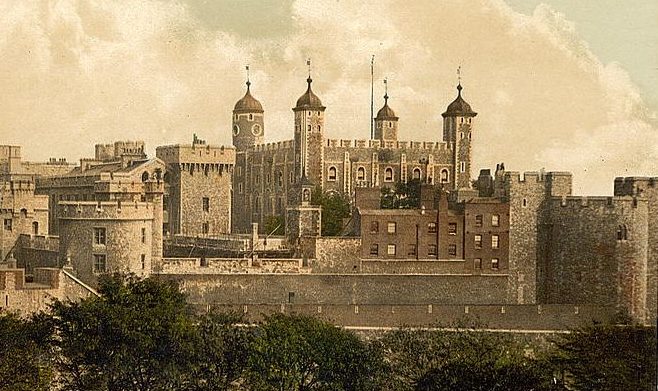
Few places evoke the drama of English history quite like the Tower of London. Once a royal residence and later an infamous prison, the Tower looms large in my novels, for over the centuries my family have been both keepers and prisoners. The Tower was both a place of peril and opportunity. My first research trip to the Tower was seeking the life of Lucy St.John, the protagonist of The Lady of the Tower. She lived there as the wife of Sir Allen Apsley, the Tower’s Lieutenant. Her years within its walls were marked by resilience and courage, as she supported her husband’s role while raising her family amid the Tower’s dark history.
As I walked the Tower’s cobblestone paths and stood within its ancient walls, I felt the weight of its stories—from fearful captivity to executions and betrayals. And yet I also sought solace in the hundreds of people who lived and worked within the Tower’s liberty. For Lucy, the Tower was a microcosm of 17th-century society, where courtiers, prisoners, and commoners collided. Seeking and discovering authentic information about all of their lives inspired my writing.
Travel Tip: The Tower offers daily tours led by the Yeoman Warders, who share gripping tales of its history. Don’t miss the Crown Jewels exhibit or the Bloody Tower, where you can delve into the mystery of the Princes in the Tower. Lucy St.John lived in the Lieutenants Lodgings, the gabled house overlooking Tower Green. Now known as The King’s House (for whichever monarch is on the throne) it is still the private residence of the Constable of the Tower.
 Whitehall Palace: The Seat of Power
Once the grandest palace in Europe, Whitehall was the centre of political and social life in 17th-century England. Though much of the palace was destroyed by fire in 1698, the Banqueting House remains, with its breathtaking ceiling painted by Sir Peter Paul Rubens. This location was central to the lives of the St.John family, who navigated the treacherous waters of court politics under Charles I and Charles II.
In The Lydiard Chronicles, Whitehall serves as a backdrop for moments of intrigue and ambition, as well as tragedy, for it was also the execution site for Charles I. Later, in The King’s Intelligencer Frances Apsley, Lucy St.John’s granddaughter, finds herself entangled in the Stuart court, balancing loyalty to her family with the demands of espionage and alliances. Visiting the Banqueting House and imagining it filled with courtiers gave me a profound sense of the grandeur and tension that defined this era.
Travel Tip: The Banqueting House is open to visitors and offers an audio guide detailing its history. Stand beneath Rubens’ masterpiece and envision the opulence of Whitehall in its heyday…and the tragedy of Charles I’s final walk as he was led to his execution.
 Westminster Abbey: History Carved in Stone
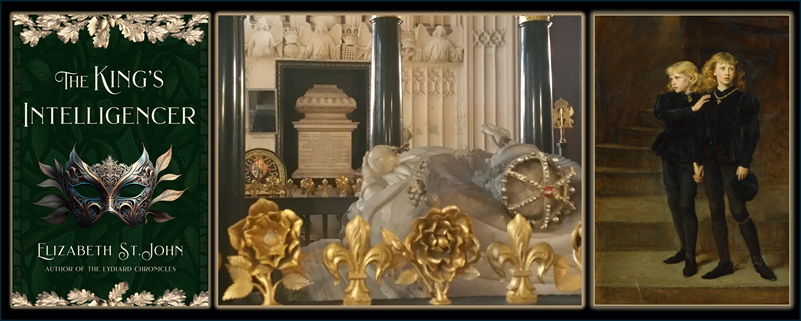
Westminster Abbey, a symbol of England’s religious and royal heritage, holds countless stories within its Gothic arches. For the St.John family, the Abbey represents a connection to their service and status. Many of their contemporaries found their final resting place here, surrounded by monarchs, poets, and statesmen. Both Sir Allen Apsley and his wife, Frances Petre, are interred in the abbey, just a few paces from the memorial to the Princes in the Tower. Touching their stones, pausing to contemplate their lives, was a profoundly moving moment for me.
The Abbey also played a pivotal role in the political and religious upheavals of the 17th century. Charles II’s declaration on their monument that he had discovered the missing Princes in the Tower “murdered by their perfidious uncle Richard the Usurper” literally cast in stone the belief that Richard III was responsible for their deaths.
Travel Tip: Plan your visit to include the Poets’ Corner, the Coronation Chair, and the Lady Chapel. The Abbey’s Evensong service offers a serene glimpse into its timeless traditions.
We can’t always visit in person the historical locations that feature in our family history. I have found that using Google Maps, especially with the photographic layer, brings you right into the heart of your research. And, tracing the lines of old roads before freeways and motorways, or calculating the time to travel using a combination of walking and cycling to arrive at horse riding hours, is always a fun exercise.
If you are fortunate enough to travel in your family’s footsteps, here are some tips to enhance your journey:
1. Research Before You Go: Delve into archives, letters, and records to understand the significance of the locations tied to your ancestry or favourite novels.
2. Engage with Experts: Many historical sites offer knowledgeable guides, genealogists, volunteers, societies and curators who can provide deeper insights.
3. Follow their Footsteps: Take time to wander through the spaces your ancestors or characters would have known. The sensory experience can be transformative.
4. Capture the Moment: Document your travels with photos and notes. Sketch a particular vista. Write a vignette of what you are feeling at that moment in time. These memories may inspire your own storytelling or deepen your connection to history.
5. Share the Stories: Whether through writing, blogging, or family gatherings, sharing what you’ve learned ensures that these stories live on.
 Visiting historical locations is more than a journey through time; it’s a way to connect with the people who came before us and understand the world they inhabited. For me, these places are a source of endless inspiration, grounding my fictional narratives in real-life settings that resonate with authenticity and emotion. Whether you’re a reader, a writer, or a genealogist, exploring these sites offers a chance to stand at the intersection of history and personal story—a place where the past comes vividly to life.
So, pack your bags, grab your family tree, and step into your family’s footsteps. You never know what stories you might uncover.