Lydiard Park, Wiltshire
 Lydiard was mentioned in the Domesday Book (1086) as one of the many manors which made up a great complex of estates or ‘fee’ belonging to Alfred of Marlborough. The Tregoze family, who originated from a village in Normandy called Troisgots, gained the estate through marriage in c1189 and the Tregoze name was added to that of Lydiard to distinguish it from the adjoining parish of Lydiard Millicent.
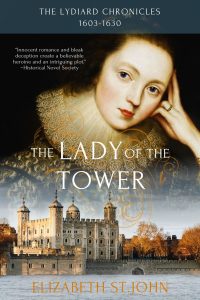
In 1300 the estate passed into the hands of the Grandison family who held it until 1348 when Lydiard together with Bletsoe in Bedfordshire descended to an heiress, Sybil, the wife of Roger Beauchamp. The Beauchamps held both estates until 1420 when Margaret Beauchamp succeeded to all her father’s properties. Margaret’s first husband was Oliver St.John, and so Lydiard came to the St.John family, who were to hold it for the next 500 years. The Lydiard Chronicles, The Godmother’s Secret and The King’s Intelligencer historical fiction novels all feature the St.John family, owners of Lydiard Park.
The Tower of London

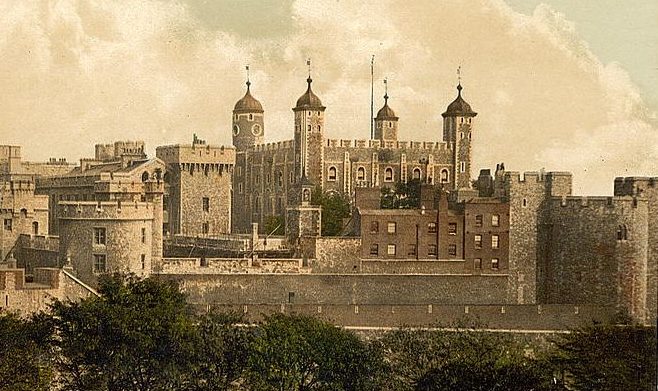
The Tower of London seems to weave itself into my novels time and again, whether through family who lived within its walls or those who suffered there as prisoners. Founded by William the Conqueror after 1066 as a symbol of Norman power, the Tower grew into a royal fortress, palace, and prison, earning its place at the heart of English history. My ancestor Lucy St.John Apsley lived there in the early 1600s when her husband, Sir Allen Apsley, served as Lieutenant. Within those walls she raised her children, tended her physic garden, and ministered to prisoners—including Sir Walter Raleigh. In the next generation, Lucy’s son-in-law would himself be confined within the Tower, a reminder that its gates could open to privilege as easily as they could close in punishment. And always, overshadowing its history, lingers the mystery of the missing princes, whose supposed bones were discovered there in 1674, a story that continues to haunt both legend and scholarship. Their story is wrapped within our family and inspired my novels The Godmother’s Secret and The King’s Intelligencer.
Perhaps it is little wonder that the Tower remains one of my favourite places to research, for it is never exhausted of new discoveries. Hidden chambers, old architectural plans, and overlooked records still surface, revealing that even after nearly a thousand years, the Tower has not surrendered all of its secrets. Each visit, each turn of a page in the archives, connects me afresh to this remarkable fortress—part royal residence, part prison, part theatre of history—and to my own family’s place within it. The Tower stands not only as a monument of power and tragedy but also as a living archive, reminding us that the past always holds more to be found.