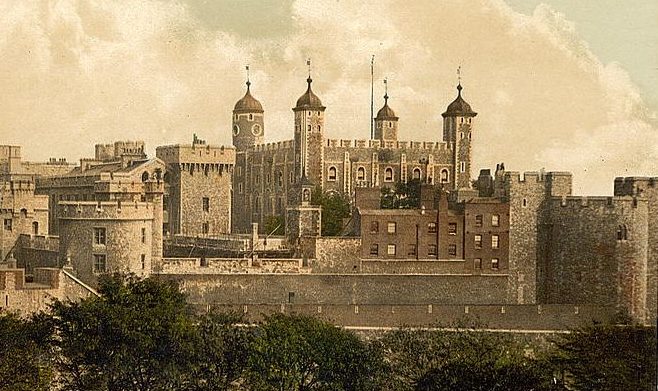
Small children scamper through the half-ruined walls of Nottingham Castle, gathering up still-warm cannonballs and rolling them about like toys. Their mother, Lucy Hutchinson, watches anxiously, while her own widowed mother tends to the wounded. Across the town, Royalist guns thunder. Within the fortifications, a mother and daughter hold a household together in the heart of England’s Civil War.
This is no fiction. It is Lucy Hutchinson’s own story, recorded in her Memoirs of the Life of Colonel Hutchinson.
When Colonel John Hutchinson was appointed governor of Nottingham Castle in 1643, he moved his family into the half-ruined fortress. With him came Lucy, their three young children — Thomas, Edward, little Lucia — and Lucy’s mother, who shared in the hardships of siege life. Their fourth child, Barbara, was probably born during the siege.
“Her mother lived with them, and helped to bear those troublesome times with cheerfulness and courage; nor did any of the family repine at their condition, but rejoiced that they had a castle and a governor to defend it.”
The castle itself was in poor shape:
“The governor, with his family, took up his abode in the castle; where they found the lodgings very ruinous, and scarce habitable, yet they made them as fit as they could with a little repair.”
It was hardly a nursery fit for babies. Yet Lucy turned the crumbling rooms into a home. Despite discomfort and danger, Lucy maintained civility and generosity:
“Here the governor and his lady lived, with their children, keeping a plentiful table for all officers, and a free entertainment for all gentlemen whose business brought them thither; yet was this hospitality managed with such frugality, that they contracted no debts, but maintained themselves honourably and comfortably.”
Even under siege, she ran the castle like a proper household — feeding officers, entertaining visitors, and caring for her family.
The war often came literally to their doorstep. Soldiers injured in skirmishes were carried into the castle, where Lucy tended to them herself:
“She administered to the sick and wounded soldiers such remedies as she could procure, and was as a mother to them in their wants.”
In an age with few surgeons and little medicine, her nursing was essential. She became the garrison’s healer as well as its governor’s wife. Not all who entered came for comfort. Royalist prisoners were also brought into the castle:
“Divers prisoners taken in sallies and skirmishes were brought into the castle, where the governor used them with as much humanity as was consistent with security.”
Even here, Lucy makes clear that her husband treated his enemies with decency — a rare and notable choice in a brutal conflict.
And through it all, the children played:
“The castle was often shot at, and many cannon-bullets came in, which the children gathered up and played with.”
It is one of the most haunting images of the Civil War — toddlers and babies learning to walk, talk, and laugh amid bombardment, their “toys” the very weapons meant to destroy them.
 Lucy Hutchinson writes in her memoirs of their work looking after the wounded, and in a poignant paragraph states:
“There was a large room, which was the chapel, in the castle: this they had filled full of prisoners, besides a very bad prison, which was no better than a dungeon, called the Lion’s Den. In the encounter, one of the Derby captains was slain, and five of our men hurt, who for want of another surgeon, were brought to the governor’s wife, and she having some excellent balsams and plasters in her closet, with the assistance of a gentleman that had some skill, dressed all their wounds, whereof some were dangerous, being all shots, with such good success, that they were all cured in convenient time. After our wounded men were dressed, as she stood at her chamber-door, seeing three of the prisoners sorely cut, and carried down bleeding into the Lion’s Den, she desired the marshal to bring them in to her, and bound up and dressed their wounds also: which while she was doing, Captain Palmer came in and told her his soul abhorred to see this favour to the enemies of God; she replied, she had done nothing but what she thought was her duty, in humanity to them, as fellow-creatures, not as enemies.”
Lucy Hutchinson
Memoirs of the Life of Colonel Hutchinson
 Inspired by Lucy’s Hutchinson’s Memoirs, I wrote The Lydiard Chronicles. By Love Divided is the second in the family saga and follows the fate of the family through England’s civil war.
By Love Divided
“It is evident that Elizabeth St.John has done extensive research in writing this book based on her own family’s experiences during this time in history. The language she uses is so authentic. Her writing engages the senses with the sights, sounds, and smells of 17th-century life. Her world and characters are so real I wanted to remain there. I loved this book, and the Lydiard Chronicles are now on my list of all-time favorite historical novels. A fantastic read.”
Editor’s Choice, Historical Novel Society