
Did Richard III murder the Princes in the Tower, or was there another reason for their disappearance? When I got up close and personal with Richard’s portrait in York, and gazed into his eyes (OK, I know, a bit woo woo, but it’s true!), I knew I had a story to tell.
Sometimes history doesn’t just whisper from the archives – it calls you by name.

While researching my St.John family line looking for my next novel, I stumbled across a revelation that stopped me cold: Elysabeth St.John Scrope, godmother of Edward V, the elder of the Princes in the Tower, was my ancestress.
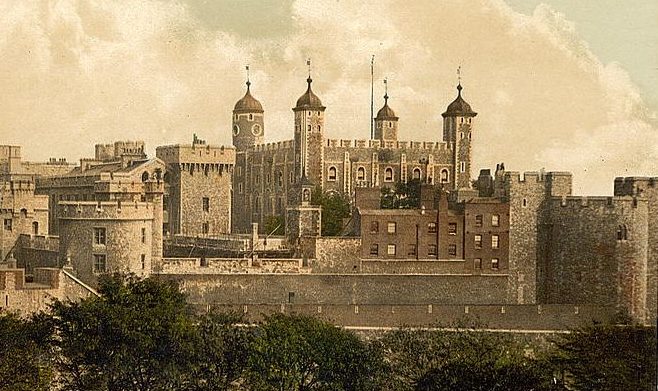
That discovery pulled me into one of the greatest mysteries of English history. In 1483, Edward and his younger brother Richard, Duke of York, disappeared within the Tower of London. Were they murdered at the command of their uncle, Richard III? Hidden away for their safety? Or did their story end differently altogether?

Nearly two centuries later, in 1674, workmen demolishing a staircase in the Tower uncovered two small skeletons. King Charles II, ever alert to threats to his crown, declared them the princes — lost, and now found — and ordered their burial in Westminster Abbey. But not everyone was convinced. Were those really the princes’ remains, or a politically convenient solution to an inconvenient mystery?

For me, the princes’ fate became more than just a historical puzzle. It was a family story, carried forward in silence and half-remembered truths. What did their godmother, my ancestress Elysabeth St.John, know? After all, a godmother was considered a blood relative, a close and important person. Could she have kept their secret?
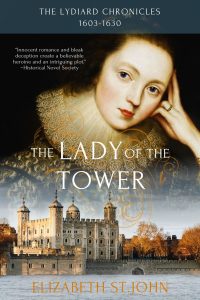
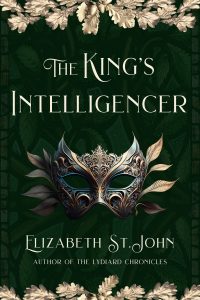
Those questions became the heart of my novel The Godmother’s Secret, told through Elysabeth’s eyes. Later, while researching The King’s Intelligencer, I discovered that the story of the princes didn’t end in 1483. Those anonymous childrens’ bones — unearthed in 1674 and interred in Westminster Abbey — became pawns once again, used in the Restoration court of Charles II to reinforce his throne.
This week’s theme, Lost and Found, feels like the perfect way to describe my life. Because this is what I love most about history: the way stories vanish into the shadows, only to be rediscovered centuries later — sometimes in the archives, sometimes beneath a Tower of London building site, and sometimes in the family tree of a very surprised novelist.





Hey cousin! Elysabeth St.John Scrope is my ancestor, too.
Happy to be part of the family circle Hugh!