On June 25, 1646, a fierce storm raged over the Island of Jersey, where a ship prepared to sail to France. Aboard was a tall, dark-complexioned young man, holding a letter from his father, King Charles I, that he knew by heart. The message was clear: under no circumstances should he surrender, even if it meant saving his father’s life. This young man was Charles, Prince of Wales, leaving England behind amidst a brutal civil war.
The Unravelling of Royalist Hopes
England had been embroiled in civil conflict for four years, with the monarchy teetering on the edge of collapse under the pressure of Parliamentarian forces. Sixteen-year-old Charles, who had participated in the battles, was now a nominal commander in the West Country. However, the tide turned against the Royalists, and Charles found himself and his forces retreating further west as Cromwell’s New Model Army advanced. The situation grew increasingly desperate, culminating in the prince’s narrow escape to the Isles of Scilly, and eventually, to Jersey, where a brief respite awaited.
A Diplomatic Tug-of-War
The relative safety of Jersey was short-lived. Charles soon became ensnared in a web of conflicting advice, with his father’s letters commanding him in multiple directions. Should he seek refuge in Denmark, join his mother in France, or choose another path altogether? His advisors were equally divided, each offering contradictory counsel. The young prince was caught in a diplomatic struggle, his every move dictated by the whims of others.
When news arrived that his father was effectively a prisoner of the Scots, the decision became inevitable. Despite his advisors’ concerns about the influence of his Catholic mother, Charles had to leave Jersey and join Queen Henrietta Maria at the Royalist court in exile, located at St-Germain-en-Laye, just outside Paris.

A New Life in France
Leaving Jersey was a difficult choice for Charles, especially after the hardships he had endured. Edward Hyde, a close advisor, described the previous year as one filled with “dismal accidents and events” that left no hope for the future. With his father’s secret letter urging him not to surrender, Charles reluctantly concluded that regrouping in France was the best course of action.
Upon arriving in France, the young prince entered a world that was both familiar and alien. Although his mother was a French princess, Charles had been raised in England, with little exposure to French customs. His early education had focused on riding, warfare, and courtly manners, rather than academic pursuits. However, these skills served him well at the French court, where he quickly made an impression with his charm, dancing, and horsemanship.
Henrietta Maria’s niece, La Grande Mademoiselle, recorded her first impressions of Charles: “Only sixteen or seventeen, but very tall for his age. His head was noble, his hair black, his complexion brown, his person passable agreeable.” Despite initial language barriers, Charles’s charm and character helped him adapt to French society, gaining acceptance at court and finding solace in his mother’s company.

A Brutal Defeat
Charles’s first stay in France lasted almost two years, but the demands of war soon drew him elsewhere. The execution of King Charles I and the rise of Cromwell’s Protectorate left the young prince as the figurehead of a defeated cause. Determined to reclaim his throne, Charles gathered a fleet and sailed for Scotland, where he was crowned King of Scotland and led an army into England. The campaign ended in disaster at the Battle of Worcester, where Charles’s forces were crushed, forcing him into a harrowing six-week escape.
When Charles finally returned to France, he was a changed man. Exhausted, emaciated, and destitute, he faced the bleak reality of permanent exile. The once-charming prince who had dazzled the French court was now a sombre figure, facing the harsh reality that he may never return home.

A Kingdom in Ruins
France, too, had changed. The country was embroiled in its own civil strife, known as the Fronde, and the royal family was on the brink of collapse. Henrietta Maria, living in dilapidated apartments at the Louvre, was struggling to survive. Her son’s return only added to her burdens, as she was unable to support him financially. Every penny she spent on Charles was meticulously accounted for, leaving the young king in a humiliating position of debt to his mother.
By the spring of 1652, the situation had reached its lowest point. The exiled Royalist court, now fragmented into rival factions, was trapped in a state of poverty and despair. The once-great hopes of restoring the monarchy seemed all but lost.
A Fateful Journey
Charles’s journey in 1646 marked the beginning of a long and arduous exile, one that would shape the future of England. The young prince, torn between loyalty to his father and the harsh realities of war, was thrust into a world of political intrigue and cultural adaptation.
His resilience, shaped by the stormy night on the Jersey coast and the turbulent years that followed, would one day lead him back to England, where he would claim his birthright and restore the monarchy. His experiences in France left an indelible mark on him, influencing his later reign and the cultural landscape of the English court.
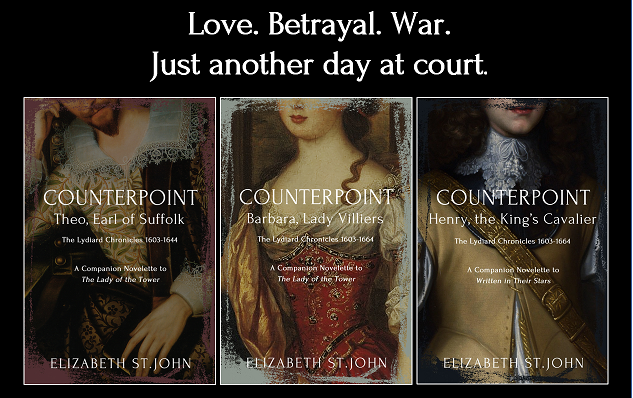
Written in Their Stars is a true story based on surviving memoirs of my family during these extraordinary times.
 London, 1649. Horrified eyewitnesses to King Charles’s bloody execution, Royalists Nan Wilmot and Frances Apsley plot to return the king’s exiled son to England’s throne, while their radical cousin Luce, the wife of king-killer John Hutchinson, rejoices in the new republic’s triumph.
Nan exploits her high-ranking position as Countess of Rochester to manipulate England’s great divide, flouting Cromwell and establishing a Royalist spy network; while Frances and her husband Allen join the destitute prince in Paris’s Louvre Palace to support his restoration.
As the women work from the shadows to topple Cromwell’s regime, their husbands fight openly for the throne on England’s bloody battlefields. But will the return of the king be a victory, or destroy them all? Separated by loyalty and bound by love, Luce, Nan and Frances hold the fate of England—and their family—in their hands.