Imagine how excited I am to read of the fabulous discovery of a Hilliard miniature of Elizabeth Leighton. I first met Elizabeth when I was researching her daughter Anne Leighton, who married Sir John St.John, First Baronet, and brother of Lucy St.John, The Lady of the Tower.

Art experts have uncovered a remarkable miniature portrait by Nicholas Hilliard, Queen Elizabeth I’s official painter, which had remained hidden in a private collection for centuries. Painted around 1585, the 58mm portrait is believed to depict Elizabeth, Lady Leighton, a lady-in-waiting to the queen and the object of Sir Walter Raleigh’s admiration. The discovery has generated excitement, especially given the portrait’s excellent condition and historical significance.
Experts Emma Rutherford and Elizabeth Goldring suggest that this intricate work, featuring Lady Leighton in elaborate court attire, might have been a love token intended for Raleigh. He famously wrote passionate poetry for Lady Leighton, including a poem placed in her pocket, hinting at a possible romantic connection. However, there is no definitive evidence of her response—unless this miniature serves as such.
The portrait, distinct from depictions of Elizabeth I, has been carefully authenticated and will be exhibited publicly for the first time at London Art Week. Priced at £120,000, it offers a rare glimpse into the personal and artistic dynamics of the Elizabethan court, highlighting Hilliard’s mastery and the enduring intrigue of Tudor history. (Source: The Guardian)
In The Lady of the Tower, Anne Leighton, daughter of Elizabeth Leighton, held an important place as both the sister-in-law and close companion of Lucy St.John Apsley. Their enduring friendship, strengthened through family ties and shared experiences, reflected the close-knit relationships among women in 17th-century England. The more I read about Anne’s life, the more I thought that her mother, Elizabeth, wasn’t really interested in her children, and was much more happy in the exciting world of Elizabeth I’s court. Anne gravitated towards her friendship with Lucy for emotional sustenance.
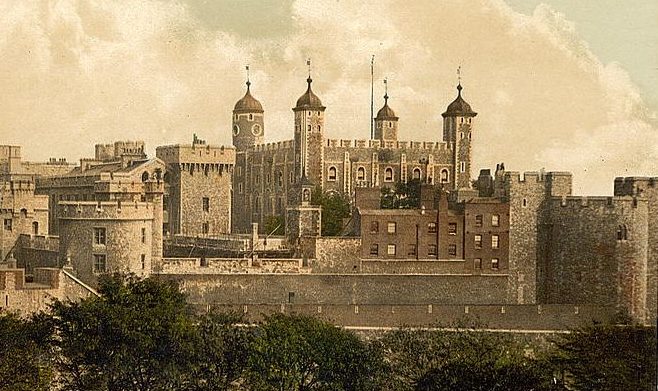
As Lucy navigated daily life within the Tower of London, Anne’s presence offered a steady source of support and understanding. Her role highlights the significance of familial bonds and friendships during a period marked by political uncertainty and social challenges, providing a quieter but essential aspect of Lucy’s story. Rather poignantly, Sir Walter Raleigh was a good friend of Lucy and her husband, Sir Allen Apsley, and his last days on earth were spent under their guard in the Tower of London. By then, Anne had died, so she did not witness the downfall of her mother’s love interest.
Huge thanks to my author friend Amy Maroney who forwarded this to me while in the depths of researching her Tudor Art Mystery WiP.