In Stuart England, women were the primary caregivers in their households, responsible for much of their family’s wellbeing. They diagnosed illnesses, prepared treatments, and administered care with knowledge passed down through generations. Physicians were often consulted only to support their own medical judgments—sometimes, they were dismissed entirely in favor of tried-and-true family remedies. Among these skilled women were members of the St.John family, who left behind a remarkable record of their medical practices through memoirs, letters, and recipe books. Their experiences—nursing family, friends, and even prisoners, through war, pestilence, and plague—became an essential backdrop to the characters and themes in my novels. (Scroll to the end to read some extracts from their letters and memoirs).
Healing in Times of Crisis

The 17th century was fraught with hardship. The English Civil War tore families apart, leaving many wounded and in desperate need of care. Plague outbreaks swept through towns and villages, sparing no household. Women like Lady Johanna St.John took up the burden of healing not just their immediate families but also their communities. She compiled extensive medicinal recipes and remedies, drawing from both folk traditions and contemporary medical knowledge. And, she wasn’t amiss by using a little alchemy and mysticism, too. Her work reflects a deep commitment to nursing in times of crisis, a testament to the resilience of women healers in an era of uncertainty.
During these uncertain years, the responsibility of nursing often fell to wives, mothers, and daughters. The letters of Lucy Hutchinson, reveal the emotional toll of caring for loved ones during war. She nursed her husband, the parliamentarian John Hutchinson, through illness and injury, as well as supported him during the siege of Nottingham Castle, balancing the roles of wife, caretaker, and political partner. Such experiences were not unique to her—they were the shared reality of countless women whose dedication and sacrifices often went unnoticed in official records.

Science and Mysticism in Medicine
Seventeenth-century medical practice was a curious blend of science and superstition. Remedies ranged from well-founded herbal treatments to alchemical concoctions that straddled the line between medicine and magic. The women of the St.John family documented their medical knowledge in recipe books, revealing a fascinating mix of empirical observation and belief in the mystical properties of herbs and minerals.
These records show an impressive level of medical understanding. Treatments for fevers, wounds, and infections were meticulously recorded and tested over generations. Many remedies, such as poultices made from comfrey or fever treatments using willow bark (which contains salicin, a precursor to aspirin), were remarkably effective. Others, such as charms and incantations, reflect the era’s lingering faith in supernatural intervention. Regardless of their methods, these women shared a common desire: to protect their families from the ever-present threats of disease and death.
The Legacy of Women Healers in Fiction
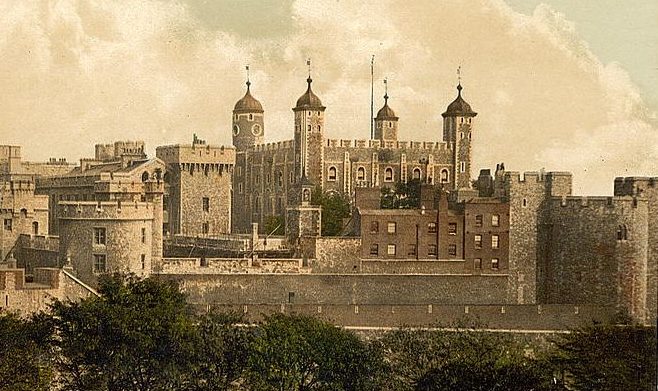
When writing about these extraordinary women, I am constantly inspired by their courage, intelligence, and compassion. Their lives inform the characters in my novels, where women navigate the perils of war, political intrigue, and disease while remaining steadfast in their duties as healers. In The Lady of the Tower, for example, my protagonist serves as a medical practitioner within the Tower of London, caring for prisoners and maintaining a medicinal garden. Her story mirrors the real-life experiences of women like Johanna St. John and Lucy Hutchinson, whose medical knowledge and resilience shaped the lives of those around them.
By bringing these historical figures to life, I hope to shed light on the often-overlooked contributions of women to medicine and caregiving. Their legacy is not just one of survival but of determination, ingenuity, and an enduring commitment to the health of their families and communities. Their stories deserve to be told—and remembered.

Extracts of Women’s Letters and Memoirs describing medical practices and sending curatives:
 Lucy St.John Apsley, nursing the prisoners in the Tower of London, 1617-1630.
“…Sir Walter Raleigh and Mr. Ruthven being prisoners in the Tower, and addicting themselves to chemistry, she suffered them to make their rare experiments at her cost, partly to comfort and divert the poor prisoners, and partly to gain the knowledge of their experiments, and the medicines to help such poor people as were not able to seek physicians. By these means she acquired a great deal of skill, which was very profitable to many all her life. She was not only to these, but to all the other prisoners that came into the Tower, as a mother. All the time she dwelt in the Tower, if any were sick she made them broths and restoratives with her own hands, visited and took care of them, and provided them all necessaries; if any were afflicted she comforted them, so that they felt not the inconvenience of a prison who were in that place.”
 Lucy Apsley Hutchinson nursing the prisoners in Nottingham Castle during the British Civil war, 1642-1647
“There was a large room, which was the chapel, in the castle: this they had filled full of prisoners, besides a very bad prison, which was no better than a dungeon, called the Lion’s Den. In the encounter, one of the Derby captains was slain, and five of our men hurt, who for want of another surgeon, were brought to the governor’s wife, and she having some excellent balsams and plasters in her closet, with the assistance of a gentleman that had some skill, dressed all their wounds, whereof some were dangerous, being all shots, with such good success, that they were all cured in convenient time. After our wounded men were dressed, as she stood at her chamber-door, seeing three of the prisoners sorely cut, and carried down bleeding into the Lion’s Den, she desired the marshal to bring them in to her, and bound up and dressed their wounds also: which while she was doing, Captain Palmer came in and told her his soul abhorred to see this favour to the enemies of God; she replied, she had done nothing but what she thought was her duty, in humanity to them, as fellow-creatures, not as enemies.”
 Anne Rochester, nursing her son, John Wilmot, 2nd Earl of Rochester (extracts of letters to Johanna St.John”) June 1680
…He continues weak, but is sometimes better than he is others…he has a kind of hecktick fever upon him…he takes no broaths made with meat for fear of heat…he spits mightily within these two days, which some say is good for him, but I find all evacuations weaken him. I confess I cannot discern amendment in him yet, but as long as life is we have hopes.
…I must, dear sister, give you an account of the first hopes of comfort I have of my son Rochester; who tho’ he is very weak, yet these two days has produc’d stranger alterations in him. He sleeps very well, is but little feverish, his great tortures of pain almost abated, gathers some strength, tho’ but little yet.
…before I sealed this, I received yours, and two waters* for my son Ro. He and his lady give you thanks…
*Lady Johanna’s recipe book includes that for Gilberts Water, a well-known curative. Her note on the use reads:
“It is bad for nothing it cures wind and the colick restoreth decayed nature good for a consumption expels poison & all infection from the Hart helps digestion purifies the blood gives motion to the spirits drives out the smallpox for the grippes in young children weomen in labor bringeth the Afterbirth stops floods for sounding and faintings”
Lady Johanna St.John corresponding with John Locke regarding the health of her son (April 1693)
…the man warrants he will affect a perfect cure & we thought it reasonable to satisfy my son with a short trial but I find he takes a way as unlikely as hitherto unsuccessful for he gives him much things as purg him..to purg away the humore…we find in his purges Aloe & in his Stomach strengtheners wormwood, either of wch I think very hot and improper for him…
…I was extremely sory yr Health was so impaired by yr last being in Towne & canot but wish that instead of taking a longer Journey you would have tryed Battersea where us should have found a Hearty welcome the worse company. It is now very sweet with woodbines and Bean Blossoms the natural perfumes of the season….As to my son he has left his Dr…and I persuade him to try the milk diet since wch his Blood is st[o]pt and his gripeings quite gone.