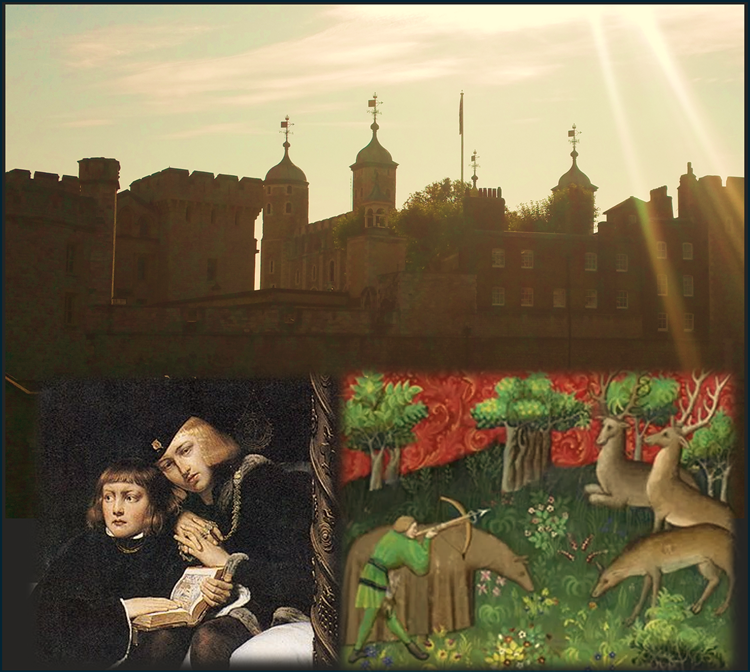
 In medieval hunting, the stalking horse was a clever tool used by hunters to get close to their quarry without being noticed. It could be a real horse trained to tolerate a hunter crouching beside it, or an artificial screen—painted canvas stretched to resemble an animal, mounted on wheels or poles. The prey, unthreatened by what looked like a familiar, harmless shape, allowed the hunter to draw dangerously near.

It’s a tactic that relies on misdirection: the prey focuses on the decoy, never seeing the true threat—or, in some cases, the hidden protector—until it’s too late.
By the 15th century, the “stalking horse” had entered the lexicon of royal power struggles. It came to describe not just a hunting trick, but a person or idea put forward to disguise someone else’s true intention. A decoy. A scapegoat. A story that conveniently shields a more dangerous truth.
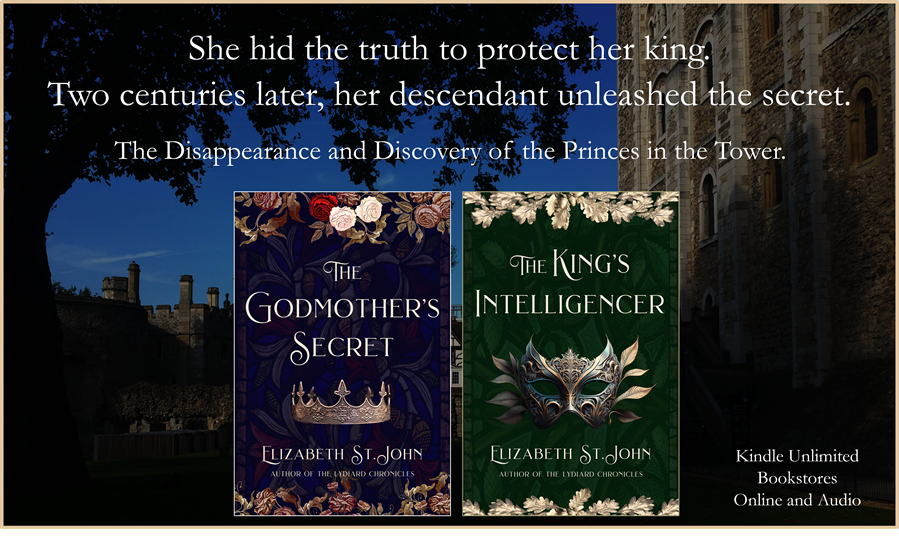
When I discovered this technique in my research, I was struck by how beautifully it mirrors the political gamesmanship at the heart of The Godmother’s Secret. Set during one of the most volatile moments in English history, the novel follows my ancestress, Lady Elysabeth Scrope, noblewoman, court insider, and godmother to Edward V, the eldest of the two young princes who disappeared from the Tower of London in 1483. Weaving her fictionalised journey into the historical record, I couldn’t help but ask: what if the story we’ve always heard was itself a stalking horse?
Lady Elysabeth walks a knife-edge between power and peril. Bound by loyalty to the royal family and intimate with those at the highest levels of court, she begins to see that what appears on the surface—accusations, power plays, even murders—may not be what they seem. In a world where survival depends on playing the game shrewdly, Lady Elysabeth becomes both observer and participant in a deadly hunt.

And here’s where the idea of the stalking horse becomes more than just historical reference. Without revealing plot spoilers, let’s just say that Lady Elysabeth must carefully manage the perception of her actions. She allows herself to be underestimated. She lets others believe she is motivated by loyalty, grief, or even weakness—while quietly maneuvering behind the scenes. At times, she even uses other people as stalking horses, letting their words and actions distract from her own quiet investigations and dangerous choices. Perhaps, most significantly, she stays close to the young princes, and with her significant position as godmother, is allowed free access to them in the Tower of London.
Her survival—and the survival of others—depends on her ability to let the powerful see what they expect to see, while she works in the shadows to protect those she loves.
Just as the medieval hunter moved unseen behind a passive shape, Lady Elysabeth cloaks her true intentions behind propriety, ritual, and the illusions of court life. The court may believe it’s hunting treason—but perhaps it is Lady Elysabeth doing the hunting all along.
History is full of stalking horses: false trails, convenient villains, and stories that survive not because they are true, but because they serve someone’s purpose. In The Godmother’s Secret, I wanted to tell a different story—one that asks not only what happened to the Princes in the Tower, but who might have known the truth… and dared to hide it in plain sight.