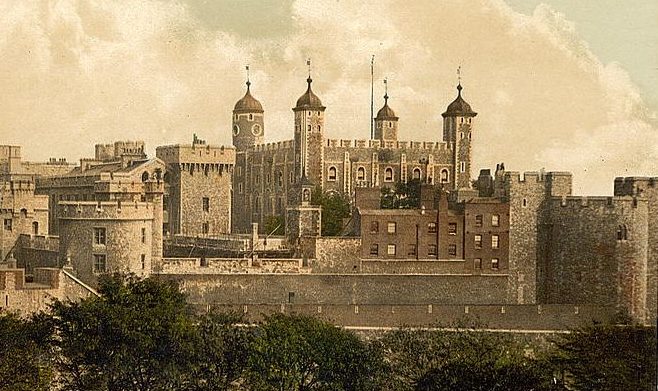
Lucy St.John, later Lady Lucy Apsley, was no ordinary 17th-century noblewoman. As the wife of the Lieutenant of the Tower of London, she lived within its formidable walls for thirteen years, witnessing the imprisonment of some of England’s most famous political figures. But beyond her duties as a wife and mother, Lucy had a keen interest in medicine, science, and—most intriguingly—alchemy. She played an active role in supporting alchemists, including Sir Walter Raleigh and the so-called “Wizard Earl” of Northumberland, going so far as to fund their experiments and even provide them with an unusual laboratory—her hen house.
At the dawn of the 17th century, alchemy was more than the mystical pursuit of turning base metals into gold; it was the forerunner of modern chemistry, deeply intertwined with medicine, philosophy, and the pursuit of divine knowledge. Some of the most brilliant minds of the age—scientists, courtiers, and even monarchs—were fascinated by its potential. Lucy found herself at the very heart of this intellectual movement, using her position and wealth to encourage its practice within the grim confines of the Tower of London.
In The Lady of the Tower, I extensively researched Lucy’s medicinal practices, her connection to alchemy, and the extraordinary men she supported. Here are some stories I uncovered.
 Lucy Provided Medical Care Using Alchemical Remedies
Lucy Apsley wasn’t just a passive observer of alchemy—she actively applied its principles in her medical practice. The line between alchemy and medicine was thin, with many alchemists experimenting with herbal concoctions, distillations, and mineral-based elixirs. Lucy cultivated a medicinal garden in the Tower, growing plants such as wormwood, rosemary, and comfrey to create remedies for prisoners and residents alike. Some of these treatments were based on Paracelsian medicine, which viewed alchemy as a means to extract the purest healing essence from natural materials.
 Sir Walter Raleigh Conducted Alchemy Under Her Roof
The famed explorer, courtier, and writer Sir Walter Raleigh spent over a decade imprisoned in the Tower after falling from King James I’s favour. During his confinement, Raleigh turned to alchemy, chemistry, and medicine, hoping to create powerful elixirs and perhaps even prolong life itself. Lucy not only allowed Raleigh to conduct these experiments, but she also facilitated and funded his access to the necessary materials—an extraordinary privilege for a prisoner.
 The “Wizard Earl” Transformed Her Hen House into a Laboratory
Henry Percy, the 9th Earl of Northumberland, earned his moniker as the “Wizard Earl” because of his fascination with alchemy, astrology, and the occult sciences. After being imprisoned in the Tower for suspected treason, he befriended Raleigh and joined him in conducting experiments. With Lucy’s permission, they transformed her hen house into an alchemical workshop, using it to test distillations, fire crucibles, and search for the philosopher’s stone—the legendary substance said to grant immortality and transmute base metals into gold.
She Funded the Alchemists’ Work Herself
Alchemy was an expensive endeavour. It required rare herbs, minerals like mercury and sulfur, specialized glassware for distillation, and a steady supply of fuel for furnaces. Lucy, a woman of independent means, personally financed some of these experiments. She saw alchemy not as a fool’s errand but as a genuine scientific pursuit—one that could unlock medical cures and hidden knowledge.
She Lived at a Time When Alchemy Was Blurring into Science
While alchemy had long been associated with mystical and esoteric traditions, the 17th century marked its transformation into an early form of chemistry. Figures such as Robert Boyle, who later became the father of modern chemistry, were still influenced by alchemical theories. Boyle’s famous The Sceptical Chymist (1661) laid the foundation for modern chemical science but was deeply rooted in the alchemical tradition. Lucy’s world straddled this transition, where alchemical experimentation was seen as both a mystical pursuit and a serious intellectual endeavour.

The Tower of London Became an Unlikely Crucible for Alchemical Research
The Tower was best known as a prison and execution site, but during Lucy’s time, it also became an unlikely hub for scientific and alchemical studies. Raleigh and the Wizard Earl weren’t the only ones experimenting—other imprisoned noblemen, including Sir Thomas Overbury and Gowrie conspirator Patrick Ruthven, dabbled in alchemical thought. The Tower’s isolation provided a secure environment for these experiments, away from prying eyes and political interference.
She Witnessed the Darker Side of Alchemy
Not all alchemists were noble scholars—some were charlatans, frauds, and even poisoners. The pursuit of alchemical knowledge could be dangerous, particularly when it intersected with political intrigue. Some alchemists were accused of creating poisons for assassinations, while others fell afoul of powerful patrons when they failed to deliver promised results. Lucy lived through the downfall of many such figures, including Raleigh himself, who was executed in 1618 despite his years of service to the Crown.
She Saw Firsthand How Alchemy and Power Were Entwined
Alchemy wasn’t just about gold-making—it was a tool for power. Monarchs and courtiers funded alchemical research in hopes of gaining wealth, medicine, and even mystical insights. King James I, though sceptical of certain aspects of alchemy, was nonetheless fascinated by occult knowledge. The fact that Raleigh and the Wizard Earl were allowed to continue their studies in the Tower suggests that even in disgrace, their work was considered valuable—or at least worth monitoring.
 Lucy Apsley’s story is a remarkable one. In the shadow of the Tower of London, she facilitated the work of some of the greatest minds of her time, transforming a prison into a place of alchemical exploration. Whether she truly believed in the possibility of transmuting metals or simply saw alchemy as a path to informing her own medical practices, her role in history deserves recognition.
Next time you think of the Tower of London, imagine not just its dungeons and executions, but also the flickering light of a furnace in a hen house—where the Lady of the Tower helped keep the fires of alchemy burning.