As I stepped beyond the well-documented 17th century into the fragmented past of the 1400s to write The Godmother’s Secret, the document trail grew sparse, and the voices of women—who shaped events yet rarely left records of their own—were mostly lost to time. Telling their stories means sifting through fragments, reading between the lines of male-dominated narratives, and unearthing the quiet but powerful ways they influenced history. I call it the “black hole” effect: some event or invisible force created circumstances or decisions, and it’s up the author to discover as much authentic detail as possible before creating the fictional wrapping. It’s painstaking work, but the thrill of discovery makes every hidden detail worth the effort.
When I discovered Elysabeth St. John—godmother to Edward V, the eldest prince and my ancestress—who became the main character of The Godmother’s Secret, I found only two documents in the archives, along with a few key dates from her life.Writing a novel around her would be challenging; but fortunately she was surrounded by people such as Margaret Beaufort (her sister) and William Catesby (her son-in-law), as well as her husband, John Scrope, 5th Baron Scrope of Bolton, who are well-documented. And, with her appointment as godmother to Edward V, I could weave in all the extraordinary stories of the Princes in the Tower – from her perspective.
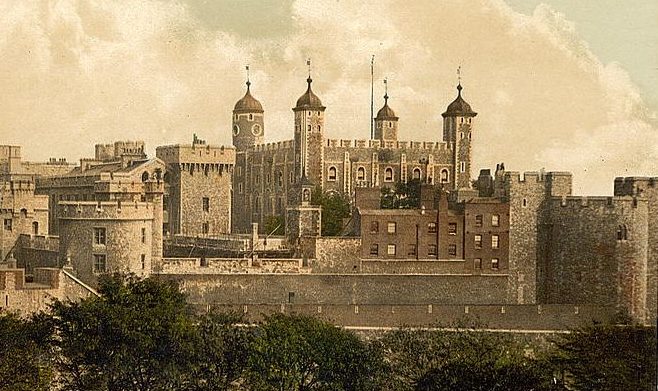
 In The Godmother’s Secret I created a plot around Elysabeth’s vow as godmother and her desperate efforts to protect her 12-year-old godson, King Edward V, from the intrigue and betrayal that surrounds him after she delivers him to the Tower of London for his coronation. In my novel, Elysabeth is navigating her own conflict, upholding her loyalty to both her husband and her sister as competing factions battle for the throne. Within a few weeks of arriving at the Tower, Edward and his brother Dickon had disappeared, Richard III had claimed the throne, and Elysabeth’s nephew, Henry Tudor, was making plans to invade England from his exile in France. More than anything, Elysabeth defies the bounds of blood and loyalty to make her own decisions for her godson’s survival in a hostile medieval world where women had little authority.
As part of my research for my novel, I visited Westminster for three crucial locations: the Abbot’s House (“Cheyneygates”), Westminster Abbey, and Westminster Hall. I was fortunate to meet with the Abbey’s Almoner, who kindly took me “behind the scenes” into the Jerusalem Chamber and other locations where Elizabeth Woodville sought sanctuary and Elysabeth St.John Scrope joined the queen as she gave birth to Edward V. As godmother to the young prince—which in medieval times was equivalent to a blood relative—Elysabeth was responsible for his spiritual wellbeing and would have played a crucial role in his early years.

One of the areas of historic research that fascinates me is that of medicines and curatives, many of which were based on superstitions and religious beliefs. While I was interpreting what Elizabeth Woodville’s confinement in sanctuary must have been like, I came across the medieval references to a “birthing girdle” and its protective powers. Because they were so fragile (fine parchment or linen) there is only one on record in England, in the Wellcome Library in London. According to tradition, “ ‘the day that you look upon the roll or carry it with you, no wicked spirit will have power over you, and it offers protections from all kinds of sudden death, adding that if a woman ‘in travell’ (labour) lays the image of this cross on her womb, she will be safely delivered without peril and the child will have ‘cristendome’ (be baptised) and the mother receive ‘purification’.” Without baptism or purification, the child and mother would suffer endlessly in Purgatory. I used this research to inform the birthing scene in The Godmother’s Secret.
It’s been both a challenge and incredibly rewarding researching and writing this novel. Of course, wading into the biggest controversy in English history is bound to raise some eyebrows. Did Richard III kill the princes? Was Margaret Beaufort to blame? Why did the Duke of Buckingham suddenly rebel after the princes disappeared? Or was the whole murder accusation Tudor propaganda? I hope readers think beyond the usual narratives to look for an “invisible force”, and enjoy the way I’ve presented the story of the Princes in the Tower.
I enjoyed recording The Godmother’s Secret Audio Book – below is an excerpt from the childbirth scene, where a very dubious midwife makes use of the birthing girdle and other remedies.