
Elizabeth St.John’s critically acclaimed historical fiction novels tell the stories of her ancestors: extraordinary women whose intriguing kinship with England’s kings and queens brings an intimately unique perspective to Medieval, Tudor, and Stuart times.
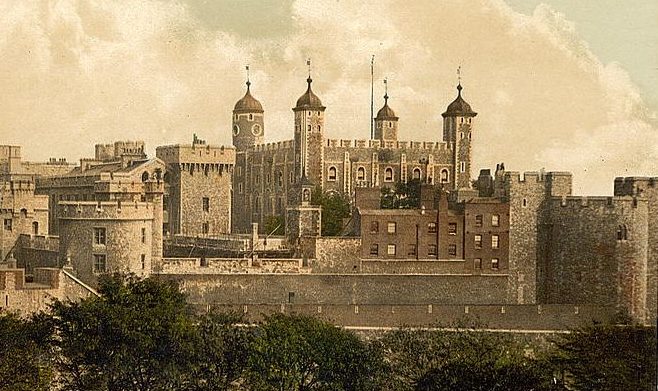
Inspired by family archives and residences from Lydiard Park to the Tower of London, Elizabeth spends much of her time exploring ancestral portraits, diaries, and lost gardens. And encountering the occasional ghost. But that’s another story.
Living between California, England, and the past, Elizabeth is the International Ambassador for The Friends of Lydiard Park, an English charity dedicated to conserving and enhancing this beautiful centuries-old country house and park. As a curator for The Lydiard Archives, she is constantly looking for an undiscovered treasure to inspire her next novel.
Elizabeth’s books include her trilogy, The Lydiard Chronicles, set in 17th Century England during the Civil War, and her medieval novel, The Godmother’s Secret, which explores the medieval mystery of the missing Princes in the Tower of London, and her newest release, The King’s Intelligencer, relating the discovery of the bones of the missing Princes – and a dangerous family secret.
From Elizabeth:
I was brought up in England and my research has taken me to family memoirs and letters at Nottingham Castle, the British Library, the Tower of London, Yale University and, of course, the family seat of Lydiard Park. From these fragments the St.Johns emerge, leaving a portrait, a sentence, a deed that seats them with us, telling of their hopes and dreams. As I researched, my voice became a conduit for their stories, recounting a passion for the England of my childhood where they once walked, where their portraits still hang, where they lived, loved and found redemption.
 We do not know my family first hand, but the more we read their words, we feel their passions. Across the ages, we understand their fears and successes, losses and loves. We are not so very different from them.
Please feel free to contact me with any questions or comments:
or follow me on Facebook @ElizabethJStJohn
and Twitter https://twitter.com/ElizStJohn


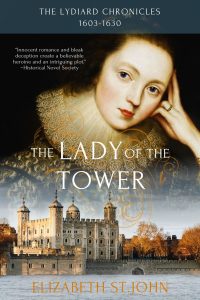

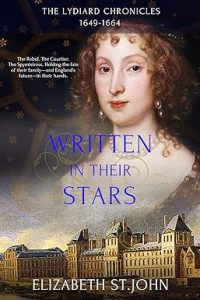

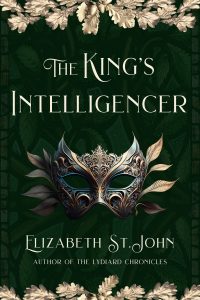
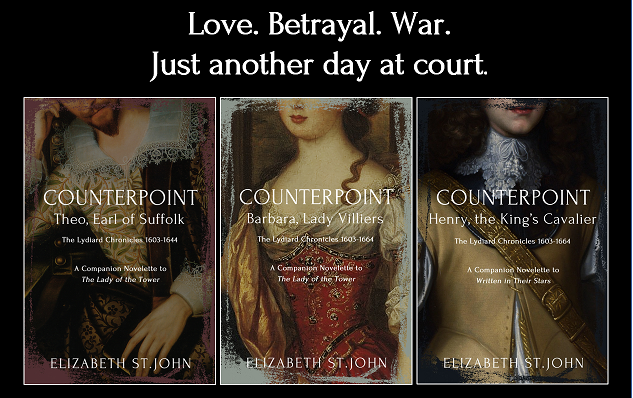

[…] Join us on Friday, January 27, 2-3 pm to hear the story behind the story of The Godmother’s Secret by Elizabeth St. John. To learn more about this prolific author and her amazing books inspired by her research of her “family memoirs and letters at Nottingham Castle, the British Library, the Tower of London, Yale University and, of course, the family seat of Lydiard Park., ” go to her website, https://www.elizabethjstjohn.com/about-2/ […]
I have just read ‘The Godmother’s Secret’. I have never believed that Richard 111 killed his nephews and although some parts have to be fiction, I believe that this could have happened especially as the bones have not had their DNA tested. I was so sorry when I finished reading the book.
I’m delighted you enjoyed reading my book, Cynthia. It’s fun to think of all the “what ifs” when there are no definitive answers!
Do you have a family tree of the St John family before 1550? I am researching my family tree and the name Johanna St John comes up, born c.1480, m. William Pemble (yeoman of Selling, Kent) b.1480.I don’t know if it’s the same family but it’s possible. I’d be most grateful for any information.
Hi Alison
Thanks for your note. We have an extensive family tree on The Friends of Lydiard Park – a total of over 5000 names, dating back to the 8th century. http://www.FriendsofLydiardPark.org.uk
I did a quick search for William Pemble and Johanna St.John, but nothing appeared. We have several Johannas in the data base, but they are all in the 1600s. I wonder if she was a widow, and that her maiden name was different? If you have any further information that might lead to her background, do feel free to email me at ElizabethJStJohn@gmail.com
My mother was a St. John: the St. John of Bletsoe family, which I believe split off from your family tree at some point. In my tree, I have a Johanna (or Joan) St. John, 1408 – 1463), daughter and heiress of Edward St. John of Somersetshire and widow of Nicholas Arundell of Trerise.
Hi Anne, thanks for your interesting post. You’re correct – the Lydiard (junior branch) and Bletsoe (senior branch) of the St.Johns family formed in the fifteenth century. The Bletsoe Branch Inherited the family’s Welsh estates, Bletsoe (Bedfordshire), and Fonmon (Glamorgan). This line was established by the eldest son, Sir John St. John (c. 1430–1491).The Lydiard Branch Inherited the Lydiard Tregoze estate in Wiltshire. This line was established by the younger son, Oliver St. John. You’ll find more great information in http://www.thelydiardarchives.org.uk – and on http://www.thefriendsoflydiardpark.org.uk
Good luck St.John-hunting!
I found your name recently I looked up the author of Sammy the White House mouse and found your name. I’m almost surprised it’s a real book I remember it being read to me like a fever dream. I’m 40 years old now. I guess I just wanted to say ty for writing that book
Hi Joseph, it is a lovely book and story, and I wish I knew more about the Elizabeth St. John who wrote it. Unfortunately, she is not me, although you’re not the first person who has reached out to me with a special memory of Sammy. The book was originally published in 1976, and is now quite a collectible / rare book. Parker Brothers also made and distributed a board game based on the story. In those days, little was recorded of authors, especially in small presses, which is where Sammy originated. I hope that somewhere Elizabeth is aware of the moving impression her book left, and how grateful her readers are for her work. It’s a lovely legacy to still be remembered fifty years on.
Thank you for responding. I apologize for the inconvenience
Absolutely no inconvenience, Joseph. I’m sorry we don’t know more about Elizabeth.