It started with a battered trunk in the attic. My great-aunt Maud had passed away, and among the boxes and dust was this old tin box tied with twine, filled with faded photographs, brittle letters, cracked leather diaries, and a family tree handwritten on stiff creamy parchment paper, the ink still clear. I remember sitting cross-legged on the floor, running my fingers over the softly worn pages and feeling something stir—a whisper from the past.
I’ve always loved history. I’ve spent years in archives, leafing through centuries-old documents, deciphering wills and court records, and tracing the journeys of people long gone. I’ve tramped through ruined castles and searched for headstones in forgotten churchyards. But it wasn’t until I opened that trunk and began to piece together the lives of my own ancestors—the St.Johns—that I truly understood how deeply personal history can be. And realised the legacy that my great aunt, who I never met, had left for someone to find.
“St.John’s writing makes you feel like you’re walking beside her ancestors, witnessing history as it unfolds.” —Amazon Review
Inside that trunk were clues: names I’d heard at family gatherings but never understood, crests I’d seen on hatchments in churches, half-told stories about royal connections and prisoners in the Tower of London. I indexed the materials, ordered books from libraries, went online and searched and discovered more—real people whose lives were filled with drama, loss, love, betrayal, and courage. People history had largely forgotten.
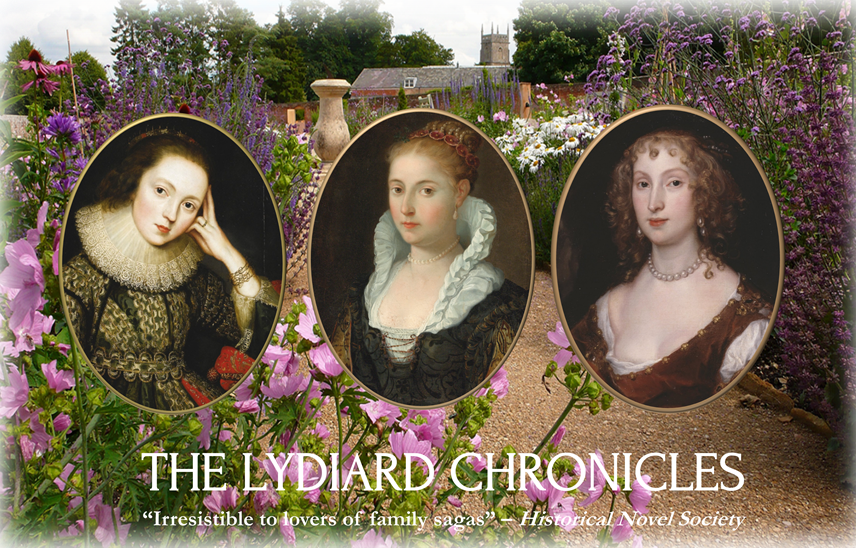
That was the beginning of The Lydiard Chronicles, The Godmother’s Secret and The King’s Intelligencer—books inspired by the lives of women like Lucy Apsley, Luce Hutchinson, Elysabeth St.John and Frances Apsley. Women who fought to protect their families, their faith, and their legacies. Women whose stories were waiting to be told.
“Who knew family history could be so gripping?” —Amazon Review
For me, genealogy became more than a chart or a list of names. It became a quest for truth, for connection, and for reclaiming the voices of those women history overlooked. Every reader who writes to say they’ve started researching their own family tree after finishing one of my novels—that’s the real gift. Because our stories don’t end with us. They begin long before we arrive.
There’s a special kind of magic in discovering you’re part of something bigger—a legacy that shaped your family in quiet, remarkable ways. And sometimes, all it takes to unlock that magic is an old trunk, a forgotten letter, and a heart open to the past.
Because history—especially personal history—has the power to transform how we see ourselves.
The urn with an inscription describing the murder of the missing princes, in front of Elizabeth I’s tomb in Westminster Abbey
The inspiration for The King’s Intelligencer grew from my research for The Godmother’s Secret, which explored the enduring mystery of the missing princes in the Tower of London. Edward V and Richard, Duke of York, vanished in 1483, with many attributing their deaths to their uncle, Richard III. During my research, I found myself captivated by this historical enigma, particularly when I visited Westminster Abbey and stood before Sir Christopher Wren’s beautiful marble urn in the Chapel of the Innocents. Installed in 1678 at the command of King Charles II, it allegedly contains the bones of two children found during his reign. He was convinced these were the missing princes, who were said to have been murdered and secretly buried in the Tower.
The graves of Dame Frances Apsley and her husband, Sir Allen Apsley, in Westminster Abbey
Standing before the urn, I pondered the proximity of Sir Allen and Frances Apsley’s graves—real-life ancestors of my protagonist Franny Apsley and confidantes of King Charles. The closeness of their tombs sparked my imagination about the authenticity of the princes’ remains. Could the bones in the urn truly belong to Edward V and Richard? Or did the 1674 discovery serve a political purpose for King Charles II during a time of religious and political upheaval?
As I dug deeper, historical scholarship such as Helen Maurer’s and Annette Carson’s research cast doubt on the identification of the remains. Their work suggested the bones might have been used as a tool to legitimize Charles II’s reign by reinforcing his image as a restorer of justice.
Exploring this climate of political manoeuvring, I unearthed family connections to espionage during the English Civil War and subsequent Restoration of King Charles. Franny’s parents, Sir Allen and Frances Apsley, and her cousin, Nan Wilmot, Countess of Rochester, were involved in covert activities. Franny’s brother, Peter, appeared as a spy in household accounts. These historical ties provided the perfect backdrop for Franny’s journey into 17th-century intrigue. In The King’s Intelligencer, I weave together the mystery of the princes with espionage and political machinations to offer a fresh perspective on a centuries-old mystery. Available on Amazon
Frances Apsley and Mary Stuart, and a letter from Mary to Frances, calling her “my dear dear dear Aurelia”
The relationship between Frances “Franny” Apsley and Mary Stuart, the future queen Mary II, as portrayed in The King’s Intelligencer, adds layers of depth and complexity to the novel and our understanding of relationships between royalty and favourite. Drawn on the cache of letters written primarily by Mary to Franny which are within the British Library, their deeply personal friendship was forged in a court full of political intrigue and constraint, where personal desires were often subjugated to the needs of the throne. Their connection is intimate, sincere, and supportive—a rare strength for women navigating the treacherous waters of the Stuart court.
William of Orange, Mary’s cousin and future husband. Together, they would rule England after her father, James II’s death.A portrait of Mary Stuart in 1677, when she was writing the letters to Frances Apsley. Sir Peter Lely (C) NPG
Rich with affection, loyalty, and a profound sense of mutual trust, the letters illustrate a powerful friendship that was not uncommon among noblewomen of their era. While today we might interpret some of the expressive language as romantic, in their time, it signified deep kinship and shared solidarity. Through these exchanges, The King’s Intelligencer captures how women in the Restoration court found connection, trust, and emotional refuge in one another. This connection was crucial, as their agency was often restricted by the rigid social and political structures around them. Using the language and tonality of Mary’s letters, I was able to construct both her character and dialogue to bring her to life. Mary Stuart knew that at some point in her near future she would be strategically married, underscoring England’s need to solidify alliances. Marrying Mary to a suitable European prince was central to securing political bonds that could help stabilize the kingdom. Foremost as a candidate was her cousin, William of Orange, and it was to him that was eventually married. Her marriage negotiations, conducted with no consideration for her personal desires, demonstrate the intense pressure placed on noblewomen to prioritize political strategy over happiness. Throughout these discussions, Mary turned to Frances for comfort, drawing strength from her friend’s unwavering loyalty and counsel. Role playing as “husband” and “wife” and with nicknames of “Aurelia” and “Mary Clorine” the letters provide solace and resilience, offering Mary an opportunity to express and receive romantic love amid the overwhelming demands and constant uncertainty of court life.
A letter from Mary Stuart to Franny Apsley, written just before her marriage to William of Orange
Reading these letters gave me invaluable insight into the emotional resilience and complex alliances women had to cultivate to survive within the high-stakes world of court life. This understanding enriched the portrayal of the challenges faced in arranged marriages, which were often seen as diplomatic tools rather than personal unions. Women like Mary had to navigate these arrangements with grace, even as they sought spaces where they could express their genuine emotions. Frances and Mary’s friendship highlights the sacrifices noblewomen were forced to make and the essential support they relied on to navigate these sacrifices. Particularly poignant is the fact that these letters began when Mary was little more than twelve years old, highlighting the pain and tumultuous emotions of a young woman entering adolescence.
The friendship between Frances and Mary thus becomes more than a narrative element; it’s a lens into the broader, often-overlooked experiences of women in the Restoration court. Mary’s letters provide a rare glimpse into the strength of women’s friendships in a world of constant political manoeuvring. The steadfast loyalty and support they offered each other reveal the importance of these bonds in helping them endure the demands and intrigues of the court. These relationships, forged out of necessity and trust, allowed them to weather the personal and political storms that shaped their lives, ultimately enriching The King’s Intelligencer with a heartfelt portrayal of female friendship amidst the unyielding machinations of royal society.
“Terrific scene-setting. Intriguing characters.” Editor’s Choice, Historical Novel Society
“Compelling, engrossing, entertaining, beautifully written food for thought. Probably the best novel of history and mystery that I have ever read. Ms St.John must rank as one of our top independent writers.” Helen Hollick, author of The Forever Queen and the Sea Witch Series
Coffee Pot Book Club 2024 Book of the Year
Available on Amazon and Kindle Unlimited London, 1674: When children’s bones are unexpectedly unearthed in the Tower of London, England’s most haunting mystery—the fate of the missing princes—is reignited. Franny Apsley, confidante to Lady Mary Stuart, heir to King Charles’s throne, becomes embroiled in the royal court’s excitement over the discovery of children’s bones. Could they be the missing princes? As a devastating family secret emerges, Franny is recruited by her cousin Nan Wilmot to determine the truth behind the bones. Her investigation, complicated by an attraction to the secretive court artist Nicholas Jameson and the influence of an enigmatic royal spy, reveals a startling plot threatening the throne and England’s stability. In a glittering and debauched society where love is treacherous and loyalty masked, Franny must navigate a world where a woman’s voice is often silenced and confront the ultimate question: What is she willing to risk for the sake of her country, her happiness, and her family’s safety? A captivating historical novel of conspiracy, passion, and courage, The King’s Intelligencer is one woman’s quest for a truth that could change the fate of a nation. A companion to the critically acclaimed best-selling novels The Godmother’s Secret and The Lydiard Chronicles, The King’s Intelligencer weaves beloved characters and actual events together to bring a suspenseful mystery to life.
Westminster Abbey, with a Procession of Knights of the Bath, Canaletto 1749
In a quiet corner of Westminster Abbey, a stone urn holds the remains traditionally believed to be those of Edward V and Richard, Duke of York—the ill-fated Princes in the Tower. Discovered in 1674 during building work at the Tower of London, these bones have long been at the center of historical debate. Were they victims of political murder, or did they survive in secrecy?
This enduring mystery forms the foundation of my novels The Godmother’s Secret and The King’s Intelligencer, where documented history inspires historical fiction to explore the fate of the princes and those who may have kept their secrets.
But why weren’t the bones DNA tested when the remains of Richard III were discovered? An in-depth article published at the time by The Guardian explains the reasoning. Here’s a reprint of key extracts:
Previously confidential correspondence reveals that the Church of England, with backing from Queen Elizabeth and government ministers, has repeatedly refused requests to carry out similar forensic tests to those used to identify the remains of Richard III this week to see if the bones buried in Westminster Abbey are those of Richard’s two nephews.
DNA testing was refused on the grounds that it could set a precedent for testing historical theories that would lead to multiple royal disinterments. The church was also uncertain what to do with the remains if the DNA tests were negative, potentially leaving the church with the dilemma of how to manage bogus bones. Authorities also resisted on the grounds the tests could not finally establish “if Richard III is to be let off the hook”.
Christopher Wren’s urn containing the children’s bones, Innocent’s Corner, Westminster Abbey
Tudor and Stuart histories insist that the remains contained in an urn designed by Sir Christopher Wren are those of Edward V and Richard Duke of York who were “stifled with pillows … by the order of their perfidious uncle Richard the Usurper”, as the 17th-century inscription puts it. A concerted attempt to get the urn opened was made by the Richard III Society, the group behind this week’s confirmation of Richard III’s remains, together with the BBC in 1993 and again by Channel 4 in 1995. A Home Office file shows the then dean of Westminster, the Very Rev Michael Mayne, strongly resisted both requests despite being “pressed very hard to agree” to allow the bones to be submitted to carbon dating, to match their deaths to Richard III’s reign, and DNA testing to prove their identities.
Buckingham Palace and then home secretary, Michael Howard, were consulted and both the Queen and the minister were in “full agreement” with the church authorities that matter should not be reopened. The dean took advice from the historian Lord Blake and an Oxford archaeology professor, Edward Hall, who said carbon dating of a sample from the late 15th century would only establish the accuracy of the bones within plus or minus 50 years. Richard III occupied the throne for two years between 1483 and 1485 before his death in the battle of Bosworth Field. “It could not therefore differentiate between Richard III or Henry VII – or another – being the guilty party. Nor would the C/14 technique give any clue as to the age at death of the children,” the dean said.
In his response to the 1995 request he said he accepted that DNA and other techniques could now establish whether or not the bones in the Abbey were those of the princes, although he could not resist mentioning the fiasco of the Turin shroud in this context. But he pointed out that in itself could create further problems.
“If the result is positive, the remains of the two princes are placed back in Sir Christopher Wren’s urn. But what if they are negative: what do we do with the remains? Keep them in the urn in the royal chapels, knowing they are bogus, or re-bury them elsewhere? And what would we have gained, other than to satisfy our curiosity in one area. It would not bring us any nearer the truth of the affair.”
Will the official position change? There is no indication that it will, although the Richard III Society continues to express an interest in testing the remains.
The Godmother’s Secret London, 1483: If you knew what happened to the missing princes in the tower, would you tell? Or forever keep the secret.
“An extremely well-written book with depth and complexity to the main characters. The author says she wanted to write a book about family love and tolerance, and a woman’s loyalty and courage. She has done so. This is the best book I’ve read in ages!” The Ricardian Bulletin – Richard III Society
The King’s Intelligencer London, 1674: When children’s bones are unexpectedly unearthed in the Tower of London, England’s most haunting mystery—the fate of the missing princes—is reignited.
“Terrific scene-setting. Particularly intriguing is that these characters are members on St. John’s own family tree, the manor where many of the discoveries are made is the seat of her own family.” Editor’s Choice, Historical Novel Society
Researching for my novels gives me an opportunity to reflect on the hidden stories of history – “herstory” – that we are discovering more and more frequently in archives and private collections. I am fortunate to be able to search for these whispers of women’s voices in The Lydiard Archives, and listening to their words inspired my family series,The Lydiard Chronicles.
In times of war—whether on battlefields or in bitter political divides—women have often been the ones to hold families together. While men fought, debated, and drew lines in the sand, women worked in the spaces between, healing wounds, bridging divisions, and ensuring that love and loyalty survived even the most fractured moments in history.
Writing The Lydiard Chronicles, inspired by my own ancestors, I was struck by how women’s roles extended far beyond the domestic sphere. Lucy St.John, Lucy Hutchinson, Frances Apsley and Anne Wilmot were not only daughters, wives, cousins and mothers; they were communicators, protectors, and peacemakers. In Written in Their Stars, their story unfolds across the bitter divides of the English Civil War—where loyalty to the King or Parliament was often a life-or-death decision. And yet, even as their men followed their beliefs to opposing sides, these women refused to let war sever the ties of love and family.
Healing More Than Just Wounds
England’s great conflict began early in the seventeenth century, and the theme of women as healers and peacemakers emerged as I researched and wrote the first Lydiard Chronicle, The Lady of the Tower. Lucy St. John, raised in the court of King James I, was from a family that knew how to navigate political storms.
Lucy St.John Apsley’s home within the Tower of London – The Lieutenant’s Lodgings
When she married Sir Allen Apsley, the Lieutenant of the Tower of London, she found herself immersed in battles for favouritism, perquisites and funding. The Tower became a focal point for political manoeuvrings among the influential and popular prisoners within. But rather than simply existing in her husband’s shadow, she used her position to care for prisoners such as Walter Raleigh and the Earl of Northumberland, providing them with medicine, books, and dignity. She understood that power came not just from politics but from kindness—and that true strength was found in compassion.
Lucy Hutchinson’s Notebook, Nottingham Castle
Her daughter, Lucy Hutchinson, held fast to her Puritan beliefs, aligning herself with the Parliamentarian cause even as her brother Allen Apsley fought for the Royalists. Their story of love and conflict inspired much of By Love Divided. But when the war ended, and victors sought revenge, Lucy became a healer in a different way—writing Memoirs of the Life of Colonel Hutchinson to preserve her husband’s honour and his legacy for his children, even when his enemies sought to erase him from history. She wielded words the way a physician wields medicine—to restore what was broken, to ensure that memory, love, and loyalty survived even the harshest of political landscapes. She may have lost her beloved Republic, but her dreams of equality and rights survives up until the present day.
Women as the Bridges Between Wars
The story ofWritten in Their Starsis not just one of war but of reconciliation. Even as the Apsleys, Hutchinsons, Wilmots and St. Johns found themselves on opposite sides, the women in the family never allowed politics to destroy their love for one another. Letters continued to be exchanged, messages carried across battle lines, healing medicinal curatives exchanged for sick loved ones. These women did not choose war, but they refused to let war choose their loyalties for them.
Lucy Hutchinson and Anne Wilmot may have supported different regimes, but they never saw each other as enemies. Instead, they understood what history often forgets—that wars end, rulers change, and politics shift, but family remains. Even in the darkest moments, they found ways to communicate, to reach across the divide, and to hold onto the bonds that truly mattered.
The Lessons We Can Still Learn
As I researched these women—reading their letters, standing in Lydiard Park where they once walked, uncovering their struggles and triumphs—I saw echoes of our own world. Today, families are still divided by politics, by ideology, by the battle lines we draw between us. But just as these women found ways to heal, to hold on to love, so can we.
They remind us that true strength is not in winning an argument or defeating an opponent. It is in listening, in healing, in keeping the ties that bind us intact. Their resilience, their wisdom, and their refusal to let war define their relationships are what make their stories so powerful—and so relevant today.
In the end, history teaches us that kings and governments come and go. But the women who refuse to let their families be torn apart by conflict? Their legacy endures.
“It is evident that Elizabeth St. John has done extensive research in writing this book based on her own family’s experiences during this time in history. The language she uses is so authentic. Her writing engages the senses with the sights, sounds, and smells of 17th-century life. Her world and characters are so real I wanted to remain there. I loved this book, and the Lydiard Chronicles are now on my list of all-time favorite historical novels. A fantastic read.” – Editor’s Choice, Historical Novel Society Review
Small children scamper through the half-ruined walls of Nottingham Castle, gathering up still-warm cannonballs and rolling them about like toys. Their mother, Lucy Hutchinson, watches anxiously, while her own widowed mother tends to the wounded. Across the town, Royalist guns thunder. Within the fortifications, a mother and daughter hold a household together in the heart of England’s Civil War. This is no fiction. It is Lucy Hutchinson’s own story, recorded in her Memoirs of the Life of Colonel Hutchinson. When Colonel John Hutchinson was appointed governor of Nottingham Castle in 1643, he moved his family into the half-ruined fortress. With him came Lucy, their three young children — Thomas, Edward, little Lucia — and Lucy’s mother, who shared in the hardships of siege life. Their fourth child, Barbara, was probably born during the siege. “Her mother lived with them, and helped to bear those troublesome times with cheerfulness and courage; nor did any of the family repine at their condition, but rejoiced that they had a castle and a governor to defend it.” The castle itself was in poor shape: “The governor, with his family, took up his abode in the castle; where they found the lodgings very ruinous, and scarce habitable, yet they made them as fit as they could with a little repair.” It was hardly a nursery fit for babies. Yet Lucy turned the crumbling rooms into a home. Despite discomfort and danger, Lucy maintained civility and generosity: “Here the governor and his lady lived, with their children, keeping a plentiful table for all officers, and a free entertainment for all gentlemen whose business brought them thither; yet was this hospitality managed with such frugality, that they contracted no debts, but maintained themselves honourably and comfortably.” Even under siege, she ran the castle like a proper household — feeding officers, entertaining visitors, and caring for her family. The war often came literally to their doorstep. Soldiers injured in skirmishes were carried into the castle, where Lucy tended to them herself: “She administered to the sick and wounded soldiers such remedies as she could procure, and was as a mother to them in their wants.” In an age with few surgeons and little medicine, her nursing was essential. She became the garrison’s healer as well as its governor’s wife. Not all who entered came for comfort. Royalist prisoners were also brought into the castle: “Divers prisoners taken in sallies and skirmishes were brought into the castle, where the governor used them with as much humanity as was consistent with security.” Even here, Lucy makes clear that her husband treated his enemies with decency — a rare and notable choice in a brutal conflict. And through it all, the children played: “The castle was often shot at, and many cannon-bullets came in, which the children gathered up and played with.” It is one of the most haunting images of the Civil War — toddlers and babies learning to walk, talk, and laugh amid bombardment, their “toys” the very weapons meant to destroy them.
Lucy Hutchinson writes in her memoirs of their work looking after the wounded, and in a poignant paragraph states: “There was a large room, which was the chapel, in the castle: this they had filled full of prisoners, besides a very bad prison, which was no better than a dungeon, called the Lion’s Den. In the encounter, one of the Derby captains was slain, and five of our men hurt, who for want of another surgeon, were brought to the governor’s wife, and she having some excellent balsams and plasters in her closet, with the assistance of a gentleman that had some skill, dressed all their wounds, whereof some were dangerous, being all shots, with such good success, that they were all cured in convenient time. After our wounded men were dressed, as she stood at her chamber-door, seeing three of the prisoners sorely cut, and carried down bleeding into the Lion’s Den, she desired the marshal to bring them in to her, and bound up and dressed their wounds also: which while she was doing, Captain Palmer came in and told her his soul abhorred to see this favour to the enemies of God; she replied, she had done nothing but what she thought was her duty, in humanity to them, as fellow-creatures, not as enemies.” Lucy Hutchinson Memoirs of the Life of Colonel Hutchinson Inspired by Lucy’s Hutchinson’s Memoirs, I wrote The Lydiard Chronicles. By Love Divided is the second in the family saga and follows the fate of the family through England’s civil war. By Love Divided “It is evident that Elizabeth St.John has done extensive research in writing this book based on her own family’s experiences during this time in history. The language she uses is so authentic. Her writing engages the senses with the sights, sounds, and smells of 17th-century life. Her world and characters are so real I wanted to remain there. I loved this book, and the Lydiard Chronicles are now on my list of all-time favorite historical novels. A fantastic read.” Editor’s Choice, Historical Novel Society
Did Richard III murder the Princes in the Tower, or was there another reason for their disappearance? When I got up close and personal with Richard’s portrait in York, and gazed into his eyes (OK, I know, a bit woo woo, but it’s true!), I knew I had a story to tell.
Sometimes history doesn’t just whisper from the archives – it calls you by name.
While researching my St.John family line looking for my next novel, I stumbled across a revelation that stopped me cold: Elysabeth St.John Scrope, godmother of Edward V, the elder of the Princes in the Tower, was my ancestress.
That discovery pulled me into one of the greatest mysteries of English history. In 1483, Edward and his younger brother Richard, Duke of York, disappeared within the Tower of London. Were they murdered at the command of their uncle, Richard III? Hidden away for their safety? Or did their story end differently altogether?
Nearly two centuries later, in 1674, workmen demolishing a staircase in the Tower uncovered two small skeletons. King Charles II, ever alert to threats to his crown, declared them the princes — lost, and now found — and ordered their burial in Westminster Abbey. But not everyone was convinced. Were those really the princes’ remains, or a politically convenient solution to an inconvenient mystery?
For me, the princes’ fate became more than just a historical puzzle. It was a family story, carried forward in silence and half-remembered truths. What did their godmother, my ancestress Elysabeth St.John, know? After all, a godmother was considered a blood relative, a close and important person. Could she have kept their secret?
Those questions became the heart of my novel The Godmother’s Secret, told through Elysabeth’s eyes. Later, while researching The King’s Intelligencer, I discovered that the story of the princes didn’t end in 1483. Those anonymous childrens’ bones — unearthed in 1674 and interred in Westminster Abbey — became pawns once again, used in the Restoration court of Charles II to reinforce his throne.
This week’s theme, Lost and Found, feels like the perfect way to describe my life. Because this is what I love most about history: the way stories vanish into the shadows, only to be rediscovered centuries later — sometimes in the archives, sometimes beneath a Tower of London building site, and sometimes in the family tree of a very surprised novelist.
The site of Lady Lucy Apsley’s medicinal garden, outside the Bloody Tower, looking towards the White Tower. Now commemorated as Sir Walter Raleigh’s garden.
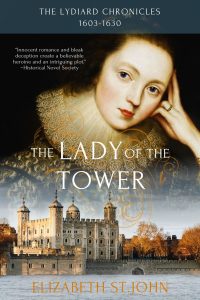
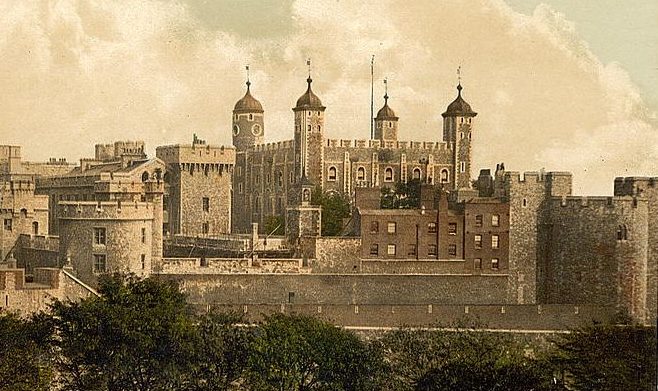
In the shadow of impenetrable stone walls and its fearful reputation of torture and imprisonment, life inside the Tower of London was far from ordinary. But for one remarkable woman in the 17th century, the Tower wasn’t just a fortress—it was home, hospital, laboratory, and sanctuary. My novel The Lady of the Tower brings to life the incredible story of Lady Lucy Apsley, who lived, worked, and raised a family within these forbidding walls for thirteen years. Not just the wife of the Lieutenant of the Tower, she was a healer, a caretaker of both body and soul, and a patron of knowledge. Visiting her home and the site of her gardens, I could easily imagine the life she led.
A Healer in the Heart of Power The Tower of London was infamous for its grim reputation as a prison, yet within those high walls, life continued. Lady Apsley served as an unofficial medical practitioner for prisoners and residents alike. At a time when the line between science and superstition was thin, she combined her deep understanding of herbal medicine with compassion for her patients “treating them all with a mother’s kindness” according to her daughter, memoirist Lucy Hutchinson. Her patients included not just those held captive, but the guards and servants who made the Tower their home. Lady Apsley wasn’t merely tending illnesses; she was mending spirits. The fear and isolation within the Tower’s walls made any act of kindness an extraordinary balm. With knowledge passed down through generations of women, and recipes exchanged between friends and neighbours, she prepared tinctures, poultices, and teas to treat fevers, infections, and melancholy.
Inside the Tower Precincts, looking towards the Lieutenant’s Lodgings
Sir Walter Raleigh’s Alchemical Dream One of the Tower’s most famous prisoners during this period was Sir Walter Raleigh. Imprisoned for treason, Raleigh spent much of his time experimenting with alchemy – in Lady Apsley’s henhouse. The “Lady of the Tower” was intrigued by Raleigh’s work and encouraged his pursuit of the philosopher’s stone—not just as a quest for gold, but as a way to unlock deeper medical truths. The blending of alchemical experimentation with practical healing was a reflection of the Renaissance spirit of inquiry, where boundaries between disciplines blurred, and new knowledge emerged from unlikely sources. This collaboration between Lady Apsley and Sir Walter symbolised a unique alliance. They understood that true power lay not in gold but in knowledge and healing. Their shared intellectual curiosity represents a forgotten chapter in the Tower’s history—one where learning persisted even in confinement.
A 17th Century Recipe Book Written by Lady Apsley’s Niece, Lady Johanna St.John
The Medicinal Garden: Nature’s Fortress Perhaps the most enduring symbol of Lady Apsley’s resilience and wisdom was her medicinal garden. Tucked within the Tower grounds, this patch of earth was her refuge and laboratory. In an era when apothecaries could be expensive and out of reach, growing one’s remedies was essential. Her garden was filled with herbs like lavender for calm, rosemary for memory, and feverfew for pain. At a time when the line between science and superstition was thin, she combined her deep understanding of herbal medicine with compassion for her patients “treating them all with a mother’s kindness” according to her daughter, memoirist Lucy Hutchinson. Her patients included not just those held captive, but the guards and servants who made the Tower their home. Lady Apsley wasn’t merely tending illnesses; she was mending spirits. The fear and isolation within the Tower’s walls made any act of kindness an extraordinary balm. With knowledge passed down through generations of women, and recipes exchanged between friends and neighbours, she prepared tinctures, poultices, and teas to treat fevers, infections, and melancholy. Each plant had a purpose. Beyond their medical uses, the garden’s existence was a quiet refuge of hope. Amid cold stone and iron gates, life grew. The Lady of the Tower’s garden was not just about survival—it was about thriving in the face of adversity.
The view from Lady Apsley’s parlour, looking out over Tower Green
Raising Children in a Fortress Living in the Tower wasn’t just a duty; it was a family affair. For 13 years, Lady Apsley raised her children within its walls. Imagine the challenge of nurturing innocence in a place synonymous with imprisonment. Her role as a mother added another layer to her strength. She provided her children not just with a safe environment but with stories of resilience, a broad education , and lessons in compassion. Consequently, her children grew up with an intimate understanding of the Tower’s complexities. It was a place of both darkness and light, cruelty and kindness.
A Legacy Remembered The Lady of the Tower isn’t just a story of one woman’s quiet strength. It’s a tribute to the many unsung heroines who practiced healing arts, nurtured families, and fostered intellectual growth in the most unlikely places. Her garden, her medical practice, and her support of scientific inquiry are threads in the larger tapestry of women’s history—one often overshadowed by the tales of kings and statecraft. Today, as we walk through the Tower grounds, we might imagine the faint scent of lavender or the murmur of forgotten knowledge. Lady Apsley’s story reminds us that even in the most constrained circumstances, growth and healing are possible.
In The Lady of the Tower, Lady Lucy Apsley turns the formidable Tower of London into a haven of resilience and healing. For 13 years, she navigates life within its stone walls, tending to prisoners and guards with remedies from her medicinal garden. While raising her children in this harsh environment, she defies expectations, blending compassion with strength. Lady Apsley’s story reveals the hidden lives of women who shaped history, nurturing hope where others saw only confinement.
Based on the true story of my ancestor, Lucy St.John Apsley, this critically acclaimed novel offers a vivid portrayal of one woman’s resilience in the face of betrayal, and her courageous journey through the turbulent politics of seventeenth-century England.
Three extraordinary women—cousins and best friends—shaped the destiny of the St.John family during the English Civil War, and in “Written in Their Stars” I bring them all together. Writing these powerful characters – “The Rebel, The Courtier and The Spymistress” — was a brilliant challenge. Researching their lives, both from family documents and archival information, was just the start. Distinguishing their voices and creating the family dynamics that ruled their actions was a lesson in reading between the lines and a psychological challenge to put myself in their very different lives. Luce Hutchinson, “The Rebel”, knew the execution of Charles I would change her life forever, destroying the monarchy and creating unimaginable torment within her family—especially since her beloved husband, John, was one of the “king-killers.” The new commonwealth promised hope and a fair government to women such as Luce, but its survival was anything but certain. Luce’s Royalist brother, Allen Apsley, and his wife, Frances, “The Courtier”, were determined to restore the exiled young Charles Stuart to the throne of England. They vowed never to give up their beliefs, fighting tirelessly even as the royalist cause seemed hopeless.
Lucy Hutchinson
Complicating matters further, their brilliant and enigmatic cousin, Nan Wilmot, Countess of Rochester, “The Spymistress”, played both sides for her own gain. She married Henry Wilmot, Prince Charles’s close friend, and used her substantial estates and cunning to spy on Cromwell’s regime and defy his wrath, all in the name of supporting the royal family’s return.
Adderbury House, Home of Anne Wilmot, Countess of Rochester
Nan’s involvement was not purely altruistic. Her manipulation of both the Royalists and the Commonwealth served her personal agenda of keeping her substantial estates intact during the Civil War. As a trusted spymistress to King Charles, she recruited Frances, who was exiled with Allen to the court in Paris, as an intelligencer. Together, they orchestrated intricate plots and gathered information to undermine Cromwell’s rule. The intertwined fates of the family highlight the complexities of loyalty, betrayal, and survival in a time of political upheaval. Their stories reveal the relentless struggle for power and the enduring hope for a restored monarchy amidst the chaos of the English Civil War. Separated by loyalty and bound by love, Luce, Nan and Frances held the fate of England—and their family—in their hands. Written in Their Starsis a true story inspired by Luce Hutchinson’s memoirs.
It’s been nearly a decade since The Lady of the Towerfirst found her way into the world, and I’m still deeply moved by how many readers have embraced Lucy St.John’s story. Whether you discovered the book through a friend, a book club, or by wandering down a rabbit hole of Stuart-era history, I want to say thank you—for reading, reviewing, and sharing this journey with me. I had heartfelt notes from two readers this week, both of whom truly brought tears to my eyes. To think, while I’m going about my day, they are spending time with my beloved characters and special places, is still hard to believe. Writing about my ancestress and her extraordinary 13-year stay in the Tower of London has been a life-changing experience.
Many readers mention the vivid atmosphere—gritty streets, echoing footsteps in stone corridors, and the heavy silence behind the Tower’s gates. This is exactly the world I hoped to bring to life.
“I was absolutely inside the story—walking through London’s dirty streets, peering behind court curtains, hearing the whispers.”
“The setting transported me—I could feel the cold stone, smell the damp air, and sense the danger.”
Lucy St.John’s strength—quiet, often hard-won—has resonated with readers around the world. Her wit, her resilience, and her refusal to be silenced remain the beating heart of the novel.
“Lucy is unforgettable—smart, loving, and brave in the face of heartbreak.”
“Her story made me think about how much hasn’t changed.”
Between the whispered plots, secret alliances, and forbidden romances, readers have shared how these twists kept them turning the pages.
“Romantic, suspenseful, and impossible to put down.”
“A story of power, peril, and love—with all the drama of a great historical thriller.”
“I missed my train stop—I had to know what happened next!”
The Lady of the Tower began as a personal exploration of my family’s hidden past. Drawing from diaries and letters written by Lucy and her family, I could picture her home within the Tower, her rooms, her daily life. I never imagined Lucy’s voice would echo so far, or touch so many. But your emails, reviews, and messages tell me that her courage, heartbreak, and hope still matter.
“A character that still lingers with me long after the last page.”

 It started with a battered trunk in the attic. My great-aunt Maud had passed away, and among the boxes and dust was this old tin box tied with twine, filled with faded photographs, brittle letters, cracked leather diaries, and a family tree handwritten on stiff creamy parchment paper, the ink still clear. I remember sitting cross-legged on the floor, running my fingers over the softly worn pages and feeling something stir—a whisper from the past.
 That was the beginning of The Lydiard Chronicles, The Godmother’s Secret and The King’s Intelligencer—books inspired by the lives of women like Lucy Apsley, Luce Hutchinson, Elysabeth St.John and Frances Apsley. Women who fought to protect their families, their faith, and their legacies. Women whose stories were waiting to be told.


 Exploring this climate of political manoeuvring, I unearthed family connections to espionage during the English Civil War and subsequent Restoration of King Charles. Franny’s parents, Sir Allen and Frances Apsley, and her cousin, Nan Wilmot, Countess of Rochester, were involved in covert activities. Franny’s brother, Peter, appeared as a spy in household accounts. These historical ties provided the perfect backdrop for Franny’s journey into 17th-century intrigue. In The King’s Intelligencer, I weave together the mystery of the princes with espionage and political machinations to offer a fresh perspective on a centuries-old mystery.




 Small children scamper through the half-ruined walls of Nottingham Castle, gathering up still-warm cannonballs and rolling them about like toys. Their mother, Lucy Hutchinson, watches anxiously, while her own widowed mother tends to the wounded. Across the town, Royalist guns thunder. Within the fortifications, a mother and daughter hold a household together in the heart of England’s Civil War.
 Lucy Hutchinson writes in her memoirs of their work looking after the wounded, and in a poignant paragraph states:


 Three extraordinary women—cousins and best friends—shaped the destiny of the St.John family during the English Civil War, and in “Written in Their Stars” I bring them all together. Writing these powerful characters – “The Rebel, The Courtier and The Spymistress” — was a brilliant challenge. Researching their lives, both from family documents and archival information, was just the start. Distinguishing their voices and creating the family dynamics that ruled their actions was a lesson in reading between the lines and a psychological challenge to put myself in their very different lives.


 Nan’s involvement was not purely altruistic. Her manipulation of both the Royalists and the Commonwealth served her personal agenda of keeping her substantial estates intact during the Civil War. As a trusted spymistress to King Charles, she recruited Frances, who was exiled with Allen to the court in Paris, as an intelligencer. Together, they orchestrated intricate plots and gathered information to undermine Cromwell’s rule.